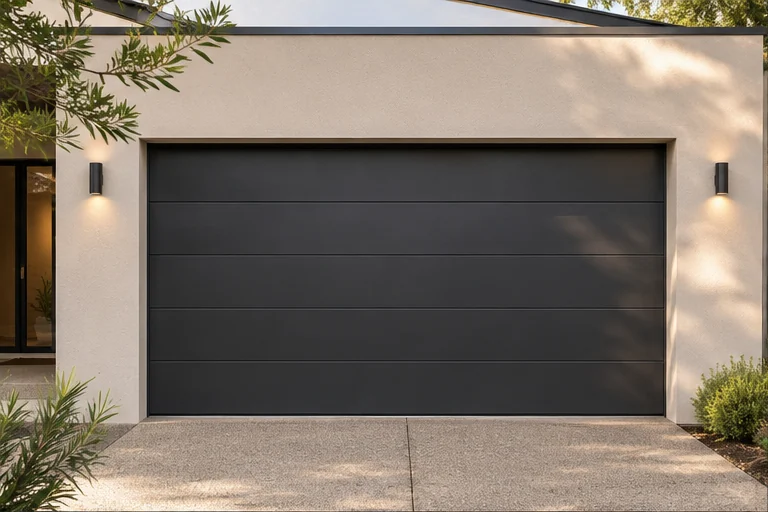
 ILLUSTRATIVE DOOR STYLE
Shown in charcoal steel
Clean lines. A quieter street presence.
Wide horizontal panels travel back along ceiling tracks. A good starting point if you want a crisp façade and a choice of insulated finishes.
Compare door typesRoller & Sectional Doors
Two doors can look equally good from the driveway and work very differently inside. Compare how each system moves, what space it needs and which finishes suit the building.
DOOR STYLES & FINISHES
Hinged panels follow tracks back under the ceiling. Options range from understated horizontal steel panels to insulated or glazed designs.
A slatted curtain rolls into a coil above the opening. This can keep much of the ceiling clear, provided there’s room for the coil and side guides.
Frosted glazing brings light into the garage while limiting direct views. Insulated panels may suit garages used as workshops or spaces attached to the home.
THE DOOR SELECTOR
Explore door profiles and finishes before you get into the details.
ILLUSTRATIVE DOOR STYLEShown in charcoal steel
Wide horizontal panels travel back along ceiling tracks. A good starting point if you want a crisp façade and a choice of insulated finishes.
Compare door types ILLUSTRATIVE DOOR STYLE
Shown in warm grey steel
A slatted curtain rolls up above the opening, leaving much of the ceiling free. Suited to garages where space behind the opening matters.
Compare door types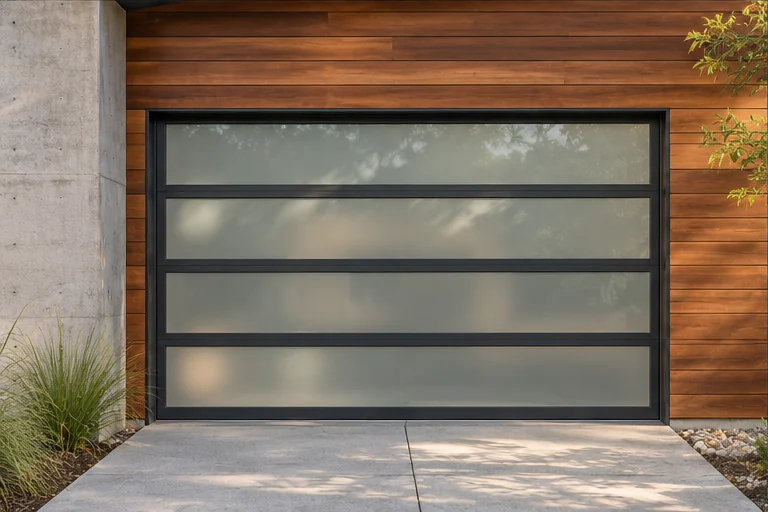 ILLUSTRATIVE DOOR STYLE
Shown in dark frame with frosted glass
Frosted panels soften direct views and bring daylight into the space. Dark frames work especially well alongside warm timber and textured masonry.
Compare door typesFAQ
A roller door typically uses the space directly above the opening. A sectional door generally travels along ceiling tracks. Exact clearance depends on the model and hardware.
You can compare manufacturer finish samples against your exterior in daylight. Panel profiles and glazing patterns also change how the door looks from the street.
LET’S TALK GARAGE DOORS
Tell us what’s happening or what you’re planning. We’ll start there.